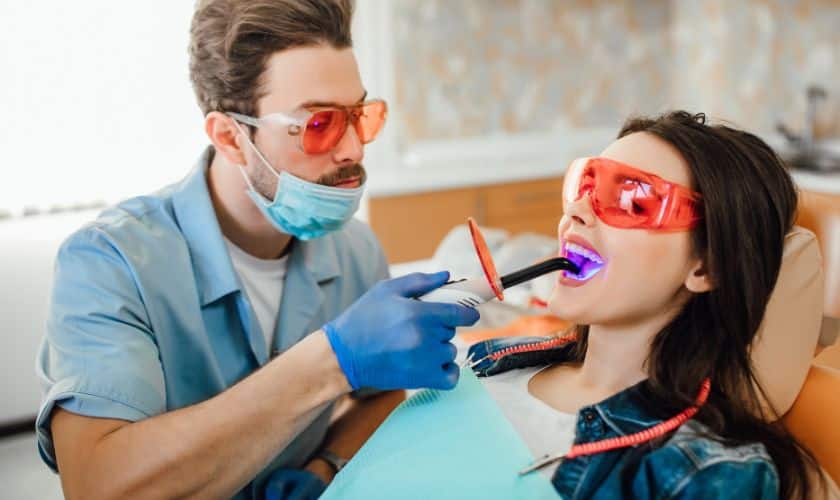
Cosmetic dentistry focuses on the appearance of your teeth and smile, so dentists who offer these treatments address concerns like tooth color, shape, size, spacing, and alignment. Cosmetic procedures differ from restorative treatments, which aim to repair damaged or missing teeth. Some patients choose a single treatment, while others combine several to reach their goals. Here’s more information on some popular cosmetic dentistry services and their benefits:
Invisalign
Invisalign is a system of clear, removable aligners that gradually shift the teeth into new positions. For this cosmetic dentistry treatment, each aligner is custom-made from smooth plastic. Patients wear a series of aligners, and each set moves the teeth slightly closer to the planned final position. Treatment begins with a consultation, where the dentist or orthodontist takes digital scans, photos, and X-rays. Using these records, the provider creates a 3D treatment plan that maps out each stage of tooth movement.
Once the aligners are ready, the patient wears each set for one to two weeks before switching to the next. Providers typically recommend wearing the aligners 20 to 22 hours per day. Patients remove them to eat, drink anything other than water, brush, and floss. Check-ups every six to eight weeks allow the provider to monitor progress, and many adults complete treatment in about 12 to 18 months. Afterward, patients usually wear a retainer to help maintain the new tooth positions.
Porcelain Veneers or Dental Bonding
Porcelain veneers and dental bonding both change the appearance of the front surfaces of teeth, so they can address chips, gaps, uneven shapes, and discoloration. The appropriate treatment choice depends on the patient’s goals and the condition of their teeth. Here’s how these two procedures differ, and when they are appropriate for a patient:
Porcelain Veneers
Veneers are thin porcelain shells bonded to the front of the teeth, and the treatment process usually requires two or three visits. During the first visit, the dentist removes a small amount of enamel to make room for the veneers. The dentist then sends scans or impressions to a dental lab, where technicians make the custom shells. At the final visit, the dentist checks the fit and color before bonding the veneers in place. Porcelain veneers are beneficial because they resist staining and can last 10 to 15 years or longer with proper care.
Dental Bonding
Dental bonding uses a tooth-colored composite resin to reshape teeth. For this cosmetic option, the dentist roughens the tooth surface, applies a conditioning liquid, and shapes the resin by hand. A special light then hardens the material. The dentist then trims and polishes the tooth to match the surrounding teeth. Bonding is often completed in a single visit, and it usually requires little or no enamel removal. Bonding typically lasts 3 to 10 years before it needs touch-ups or replacement, but it can stain more easily than porcelain veneers.
Teeth Whitening
Teeth whitening lightens the shade of natural teeth, and professional options fall into two categories: in-office treatment and dentist-supervised at-home kits. In-office whitening takes place in the dental chair and usually lasts 60 to 90 minutes. The dentist first places a protective barrier over the gums, then applies a high-concentration peroxide gel to the teeth. Some systems use a light to activate the gel, but no matter the method, patients often see a noticeable change after one in-office appointment. For at-home whitening, the dentist takes impressions to make custom trays that fit the patient’s teeth and provides a lower-concentration peroxide gel. The at-home method takes longer, but it allows patients to whiten on their own schedule.
Benefit From Cosmetic Dentistry Services
Invisalign, porcelain veneers, dental bonding, and teeth whitening each address different cosmetic concerns. A consultation with a cosmetic dentist can help you determine which options fit your goals. If you want cosmetic dental services, contact a dental practitioner experienced in the treatments you are interested in. Your dentist can also explain the maintenance to expect and the expected results of each treatment before you decide.