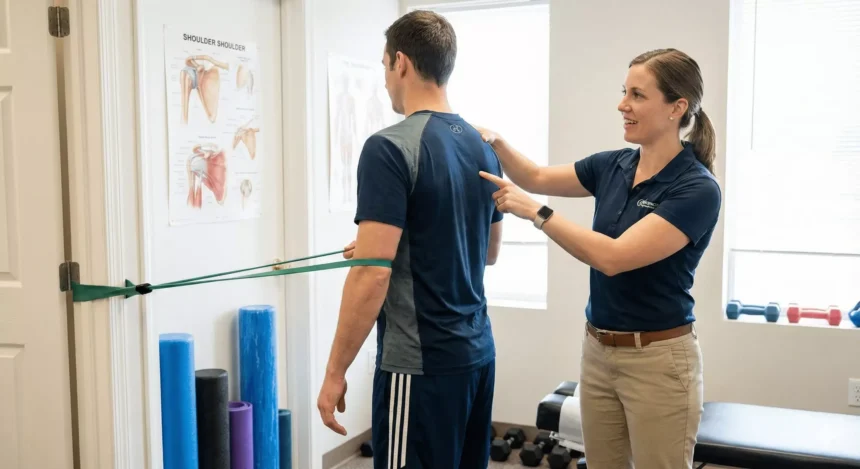
The shoulder is a mobile joint because of its labrum, a ring of firm cartilage that lines the rim of the shoulder socket. The labrum deepens the socket and helps hold the head of the upper arm bone in place. A labrum tear can change how your shoulder moves, how secure it feels, and how well it handles everyday tasks. Understanding these changes helps you recognize the injury and seek proper care.
Loss of Joint Stability
The shoulder is a ball-and-socket joint, but the socket is shallow, much like a golf ball resting on a tee. The labrum acts as a bumper around the edge of the socket. It adds depth and creates a suction seal that keeps the ball centered. It also serves as an attachment point for key ligaments and the biceps tendon.
When the labrum tears, the joint loses part of this support system. The upper arm bone may shift too far forward, backward, or downward during movement. In more severe cases, the joint might slip partially or fully out of the socket. Each instability episode can stretch the surrounding tissues further, raising the risk of repeat injuries.
Restricted Range of Motion
A torn labrum can make everyday movements difficult. Loose fragments of cartilage may catch inside the joint, creating a locking, popping, or grinding sensation as you move your arm. Inflammation around the injury can also cause stiffness, limiting how far you can comfortably raise, rotate, or extend the shoulder.
Overhead motions tend to be the most affected with a labrum tear. Reaching for a high shelf, brushing your hair, or putting on a jacket may trigger sharp discomfort deep in the joint. Athletes who throw, swim, or play tennis often notice the problem first during their sport.
Guarding the shoulder and avoiding certain positions might be a common response to shoulder injury. While this may ease discomfort short-term, reduced use can lead to tightness in the joint capsule and surrounding muscles. This further narrows your range of motion.
Weakness in Labrum Tear
Stability and mobility work together to give your shoulder strength. When a labrum tear disrupts both, the muscles of the rotator cuff and upper back must work harder to keep the joint in position. This added strain can lead to fatigue, reduced endurance, and a noticeable drop in power.
Watch out for these symptoms:
- A sudden weakness or heaviness in the arm during overhead activity, often paired with pain inside the shoulder
- Difficulty lifting objects away from the body, even those that were once manageable
- A noticeable decrease in grip strength or arm endurance during routine tasks
- Persistent aching deep in the shoulder joint after physical activity or prolonged use
- Loss of throwing power, accuracy, or control in athletes who rely on overhead mechanics
- A catching or giving-way sensation when the arm is used in certain positions
Left untreated, this weakness can cause other muscles to compensate. This may lead to poor movement patterns and added stress on the neck, elbow, or opposite shoulder.
Contact Your Sports Medicine Specialist
A labrum tear can weaken the joint’s foundation, limit your movement, and keep you from regular activities. Early diagnosis makes effective treatment possible, from targeted physical therapy to minimally invasive arthroscopic repair. Schedule an appointment with a sports medicine specialist to evaluate your symptoms, order the right imaging, and build a treatment care plan.