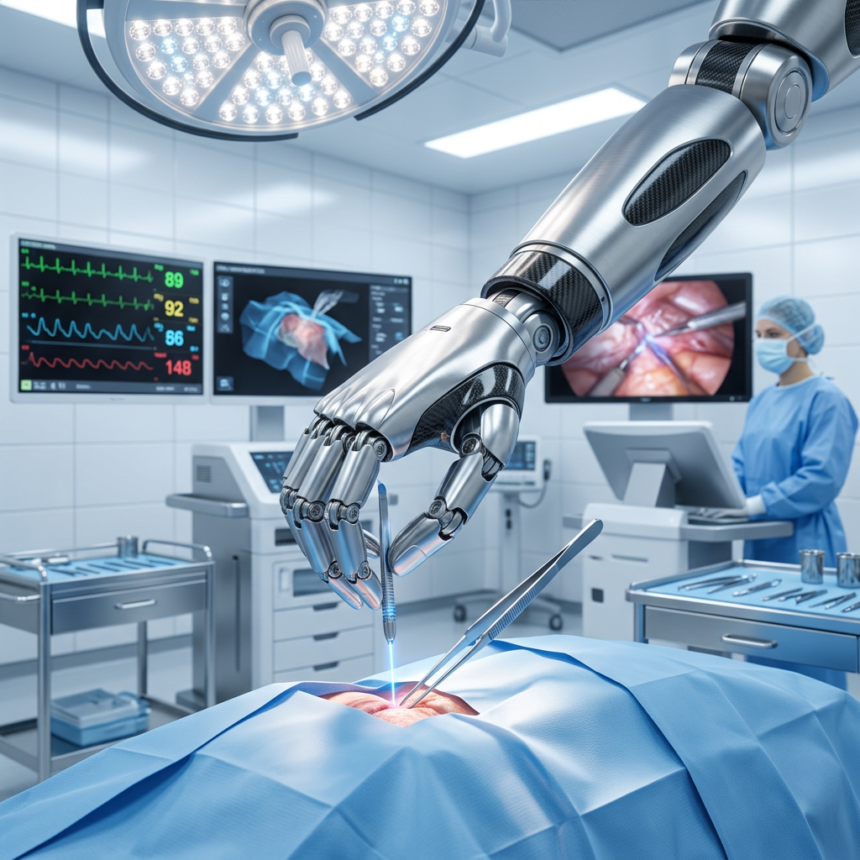
Advanced robotic surgery is a minimally invasive surgical approach that uses robotic-assisted technology to help surgeons perform complex procedures. During robotic-assisted surgery, surgeons operate specialized instruments through a robotic system that provides enhanced visualization and flexibility. Here is what you need to know about advanced robotic surgery:
How Does Robotic-Assisted Surgery Work?
A robotic surgical system does not operate on its own. The surgeon stays in full control throughout the procedure, and the system responds only to the surgeon’s hand and foot movements. Robotic surgery systems often include three main parts; these are a surgeon console, a patient-side cart with robotic arms, and a vision system that displays live images. Before the procedure begins, the surgical team makes small incisions, which allow the camera and instruments to enter the body.
The Surgeon Console
The surgeon sits at a console a few feet from the operating table. A viewer inside the console displays a magnified, three-dimensional image of the surgical area, and hand controls guide the instruments. When the surgeon moves their hands, the system scales those movements into small and steady motions. Some systems also filter out natural hand tremors.
The Cart and Instruments
The patient-side cart holds the robotic arms, which carry a camera and surgical instruments. These instruments have wrist-like joints that bend and rotate further than a human wrist. A bedside team stays next to the patient, exchanging instruments and assisting the surgeon as needed. Although the robotic arms perform the physical movements, every action comes directly from the surgeon’s commands.
Which Procedures Use Robotics?
Surgeons use robotic surgery for a range of general surgery procedures. The approach suits operations that require detailed work in tight spaces, and it can serve as an alternative to open surgery or standard laparoscopy. Common procedures include:
- Hernia repair: Surgeons repair inguinal, ventral, umbilical, and hiatal hernias by reinforcing the weakened area, often with surgical mesh.
- Gallbladder removal (cholecystectomy): This procedure removes the gallbladder, typically to address gallstones or inflammation.
- Colorectal surgery: Surgeons remove diseased sections of the colon or rectum to address conditions such as diverticulitis, polyps, or cancer.
- Anti-reflux surgery (fundoplication): This procedure reinforces the valve between the esophagus and stomach to manage chronic acid reflux.
- Other abdominal procedures: Surgeons also use robotic systems for appendix removal, certain stomach procedures, and spleen removal.
What Are the Benefits?
Robotic surgery offers several potential benefits. Smaller incisions often mean less visible scarring, and patients may experience shorter hospital stays. The magnified 3D view gives surgeons a detailed view of tissues, supporting careful work near nerves and blood vessels. Recovery timelines also differ between approaches. Some patients return to daily activities sooner after a robotic procedure than after open surgery, but outcomes depend on the procedure, overall health, and how closely the patient follows post-surgery instructions. Your surgeon can explain what recovery generally looks like for the specific procedure you need.
What Are the Potential Risks?
Like any surgery, robotic surgery has risks. These include bleeding, infection, blood clots, and anesthesia reactions, and they apply to both robotic and traditional methods. In some cases, a surgeon may switch to open surgery during the procedure if unexpected issues arise. Mechanical problems with the robotic system are uncommon, but they remain a possibility. Robotic surgery also has practical limitations. Procedures sometimes take longer than traditional surgery, which means more time under anesthesia. The surgeon’s experience with robotic systems also plays a key role.
Learn More About Robotic Surgery
Advanced robotic-assisted surgery allows surgeons to perform minimally invasive procedures with magnified visibility and precise instrument control. Surgeons use it for hernias, gallbladder conditions, colorectal disorders, and other digestive problems; it offers potential benefits along with specific risks. Contact a qualified surgeon near you to schedule your consultation and learn more about robotic surgery today.