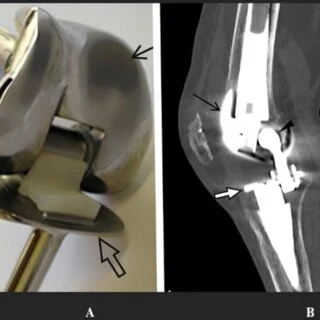
Modern total knee replacement benefits from major improvements in imaging, implant design, and surgical technology. Knee replacement surgeons now use three-dimensional planning, robotic assistance, and refined techniques to tailor each procedure to the individual patient. Learn more about innovations in knee replacement techniques.
Better Fit
Better-fitted implants address this challenge of individual knee shapes. Before surgery, a CT scan captures detailed images of the knee. Engineers and surgeons use these images to build a three-dimensional model, then design an implant that mirrors the natural contours of the patient’s bone. In many cases, patient-specific cutting guides are produced alongside the implant to help the surgeon make accurate bone cuts.
A closer fit may reduce overhang or gaps between the implant and bone, both of which can contribute to wear and alignment issues. A custom implant allows for more natural movement when using stairs and performing other knee-bending movements.
Outpatient Recovery
Improved anesthesia techniques, including spinal anesthesia and targeted nerve blocks, control pain while limiting side effects such as nausea and grogginess. Multimodal pain management combines several medications to reduce reliance on opioids. Your team of knee replacement surgeons will consider your overall health, medical history, and support system at home before recommending this option.
Better Alignment Techniques
Proper alignment is essential to the long-term success of a knee replacement. When an implant is positioned correctly, weight is distributed evenly across the joint. This balance can reduce wear and help the implant last longer.
Robotic-assisted surgery has become one of the most significant tools for improving alignment. Using a preoperative scan, the system creates a virtual model of the knee. During the procedure, the surgeon guides a robotic arm that helps keep bone cuts within the planned boundaries. The surgeon remains in control at all times, and the technology enhances accuracy.
Computer navigation offers another option. Sensors track the leg position and surgical instruments in real time, providing precise measurements throughout the operation. Some surgeons also use sensor-equipped trial components to assess the balance of the surrounding ligaments before placing the final implant.
Minimally Invasive Procedures
Traditional knee replacement involves a long incision and the disruption of the muscles and tendons around the joint. Minimally invasive techniques use a shorter incision and specialized instruments designed to work around key soft tissues, such as the quadriceps tendon, rather than through them.
By preserving more healthy tissue, minimally invasive surgery may offer several benefits:
- Less pain after surgery
- Reduced blood loss
- A smaller, less noticeable scar
- Lower risk of certain complications
- A faster return to walking and daily activities
Not every patient is a candidate for a minimally invasive approach. Factors such as body weight, the severity of joint damage, and previous knee surgeries influence which technique is best. An experienced surgeon will evaluate your condition and explain the options that best suit your needs.
Revision Replacement
When a knee replacement implant wears out, becomes loose, or is painful, revision surgery may be necessary. Revision knee replacement is more complex than the original operation. A surgeon must remove the existing implant and address damage to the surrounding bone before placing a new one; advances in revision techniques have improved outcomes considerably.
Explore Knee Replacement Surgeons
Advances in implant design, anesthesia, alignment technology, and surgical technique have made knee replacement more precise and personalized. The right surgeon can help you determine which of these innovations may benefit you and guide you through each stage of treatment and recovery. If knee pain is limiting your mobility or quality of life, explore knee replacement surgeons in your area and schedule a consultation to discuss your options.