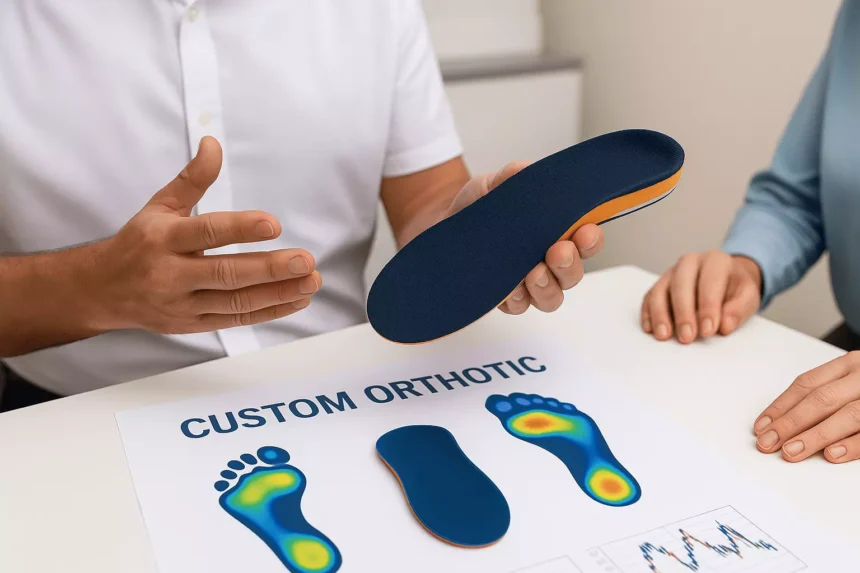
A podiatrist is a doctor of medicine, and this specialist treats the feet, ankles, and lower legs. Podiatrists typically complete four years of medical school and a hospital residency. Since they study foot structure in depth, many podiatrists prescribe custom orthotics as part of treatment. Here are some of the benefits of seeing a podiatrist for orthotics:
Customized Treatments
A lab builds the orthotic from your mold, and the podiatrist writes the specifications. Each prescription matches a specific diagnosis. If you have plantar fasciitis, the device may include extra arch support and a deep heel cup. Flat feet, high arches, and bunions each call for different shapes.
Materials vary by need. Rigid shells control motion, while soft foams cushion sensitive areas. Runners may choose a flexible design, and people with diabetes may need extra padding. Your podiatrist explains each option before the lab starts work.
Biomechanical Assessments
Custom orthotics start with a biomechanical assessment. When you arrive, the podiatrist reviews your symptoms, activity level, and footwear. The doctor watches you stand and walk, and they note any shifts in your arches or heels. They may also measure your leg length and joint flexibility.
If your gait raises questions, the podiatrist may use a pressure plate or video analysis. A pressure plate maps force across each foot, and video shows motion frame by frame. These tools reveal subtle patterns in your stride.
Knee or lower back pain sometimes traces back to these foot patterns. Some feet roll inward too far, and others roll outward. While both patterns look minor, each one shifts stress to different joints and tissues. The assessment results guide every later step.
Precise Positioning
Once the assessment is complete, the podiatrist captures the exact shape of your feet. Offices use a 3D scanner, plaster casts, or foam impressions. The doctor holds your foot in a neutral position, and this step records your ideal alignment. The mold captures several specific details:
- Arch height and length
- Heel angle and width
- Forefoot position relative to the heel
- Pressure points from calluses or bony areas
This detailed molding process ensures that every contour of your foot is accounted for, making the orthotics highly personalized. It’s a straightforward but critical step that sets a strong foundation for addressing foot pain or alignment issues. While the process may vary depending on the tools used, the goal is to create a device that fits into your daily life while offering maximum support.
Ongoing Modifications
When you first receive your orthotics, the podiatrist checks the fit in the office. You wear them for short periods at first, and you increase the time over a few weeks. Follow-up visits track your progress. Adjustments may cover several areas:
- Trimming edges that rub
- Adding or removing padding
- Raising or lowering the arch
- Replacing worn top covers
Schedule a Podiatrist Appointment
Custom orthotics involve several steps beyond a simple fitting. A podiatrist evaluates your movement, and they adjust the device over time. If you have ongoing foot, heel, or ankle pain, contact a sports medicine clinic for an evaluation. Call or book online to schedule your biomechanical assessment.