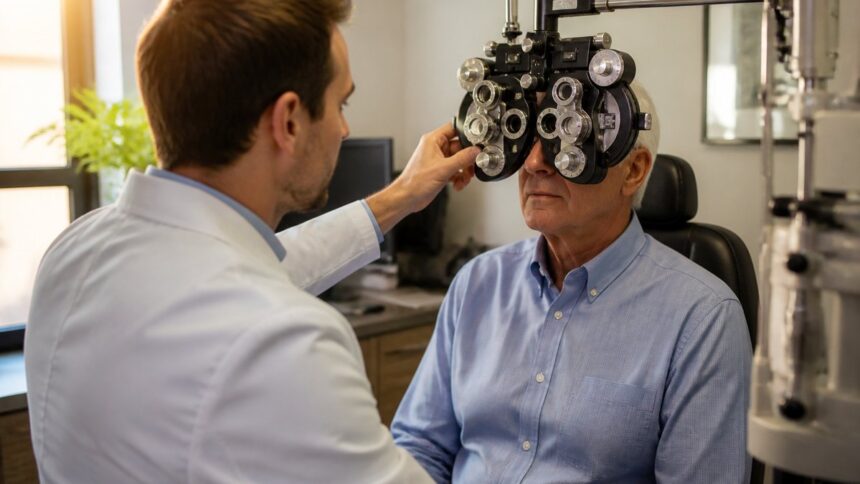
Eye exams give eye care providers a structured way to assess vision and overall eye health, and they can reveal changes before symptoms appear. Some eye diseases progress quietly in their early stages. Regular testing helps uncover patterns that are not obvious in day-to-day life. When results from each visit are compared over time, subtle shifts in pressure, clarity, or eye structure can stand out, guiding decisions about monitoring or treatment. Here is more information on the role of eye exams in detecting early signs of eye disease:
What Do Eye Exams Entail?
During eye exams, the doctor reviews the patient’s medical history, measures how clearly they see at different distances, and evaluates the structures inside and around their eyes. Each step serves a distinct purpose, and together they provide a detailed understanding of eye function.
- Case history: The doctor may ask about vision changes, general health, medications, and family history.
- Visual acuity testing: Reading letters on a chart measures how well each eye sees and helps determine whether a new prescription is needed.
- Eye pressure measurement: Tonometry measures internal eye pressure, and elevated readings raise concern for glaucoma.
How Is Eye Disease Detected?
Detection starts with pattern recognition. Some eye diseases leave specific signs on exam even when vision still tests well. The doctor studies the optic nerve shape, blood vessel appearance, and retinal surface; any irregularities are compared with typical findings. When a structure looks different from expected or from earlier records, further testing follows.
Because glaucoma can affect different aspects of eye health, screening relies on several related measurements rather than a single reading. Eye pressure, corneal thickness, optic nerve appearance, and visual field testing work together, and changes across these tests can raise suspicion even before a person notices blind spots. Early nerve fiber loss may show on imaging. This loss prompts closer monitoring or treatment.
Retinal diseases such as macular degeneration may be identified through dilated examination and imaging. The doctor looks for small hemorrhages, fluid, pigment changes, or deposits in the retina; these findings are mapped to track progression. When new areas appear or existing ones enlarge, the pattern guides treatment planning.
How Is Early Detection Beneficial?
Early detection allows less invasive treatment options. When glaucoma is identified early, pressure-lowering drops or other therapies may have a better chance of preserving optic nerve tissue. Retinal disease caught early may respond more predictably to medical or laser treatments, and those responses protect functional vision.
Monitoring from an early point also supports more accurate risk assessment; if small changes remain stable across several eye exams, the doctor may recommend continued observation with scheduled follow-up visits. When test results shift between visits, the timing and degree of change help determine when to adjust treatment. This approach supports overall health.
Book an Eye Exam Now
Regular eye exams give you a structured way to track eye health over time, and they support early detection of disease before symptoms interfere with daily tasks. Because some conditions progress quietly, waiting for noticeable vision loss delays intervention. Delays limit your treatment options. To keep a consistent record of your eye health, schedule a comprehensive exam with an eye care provider.