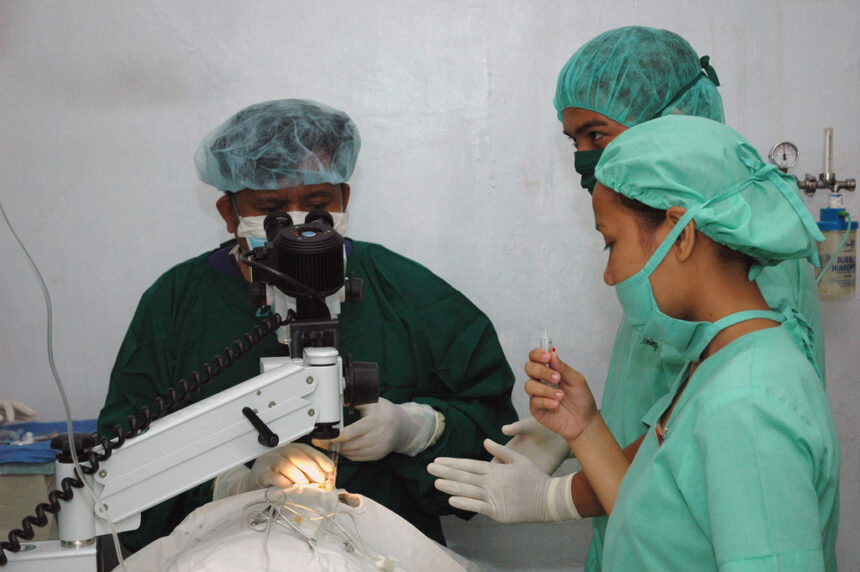
Recovery after cataract surgery typically takes a few weeks. Vision improves within the first few days, but full stabilization may take longer depending on the individual. When recovering from an eye procedure, patients should use prescribed eye drops, avoid rubbing their eyes, and attend follow-up appointments so that their ophthalmologist can monitor for complications. Here is more information on what cataract surgery involves and what recovery generally looks like:
What Is Cataract Surgery?
Cataract surgery removes the eye’s clouded natural lens and replaces it with an artificial intraocular lens (IOL). Lens clouding occurs gradually as proteins break down over time, and aging often contributes. Because this deterioration affects light transmission through the eye, patients typically experience blurred vision, glare, and difficulty seeing at night. The procedure typically takes 10 to 15 minutes.
Once the lens is removed, the surgeon inserts the IOL. The IOL requires no maintenance, and it becomes a permanent part of the eye’s structure. Topical anesthesia numbs the eye during the procedure. Patients remain awake but may feel no pain throughout the process.
What Is Recovery Like?
Recovery from cataract surgery occurs in stages, and the timeline varies by individual. Patients may notice improved vision within a couple of days. Full stabilization takes a few weeks as the eye gradually adjusts to the new lens. Post-procedure symptoms may include bloodshot eyes and blurry vision. A follow-up appointment is scheduled after surgery, which allows the surgeon to confirm that the eye is healing as expected.
What Are Post-operative Care Tips?
Post-operative care after surgery involves several practices that support safe, effective healing. Patients may be advised to:
- Follow the prescribed eye drop schedule closely
- Avoid rubbing or pressing on the eye
- Refrain from swimming, hot tubs, and dusty environments
- Avoid applying eye makeup or face creams near the eye
- Limit screen time if it causes eye strain or fatigue
Following these guidelines, along with attending all scheduled follow-up appointments, supports a smoother recovery.
How Can an Ophthalmologist Help?
An ophthalmologist plays a central role throughout recovery, not just during the procedure itself. Follow-up visits allow the surgeon to monitor for signs of infection, inflammation, or elevated eye pressure, all of which are treatable when identified early. These appointments also give patients a chance to report unusual symptoms; patients should promptly report sudden vision changes or persistent pain to the ophthalmologist.
An eye care professional adjusts the treatment plan as needed; this may involve modifying the eye drop regimen or addressing dry eye symptoms. Prescriptions for glasses may also be updated once vision stabilizes. Patients who stay in consistent contact with their ophthalmologist throughout recovery potentially experience better long-term outcomes, as it helps an ophthalmologist identify and address complications sooner.
Facilitate Your Recovery
Cataract surgery restores clarity to vision that has gradually diminished over time, and the weeks following surgery affect the outcome. Following prescribed eye drops, protecting the eye from irritation, and attending follow-up appointments all contribute to a smoother recovery. If you are recovering from cataract surgery, contact your ophthalmologist with questions or unexpected symptoms.