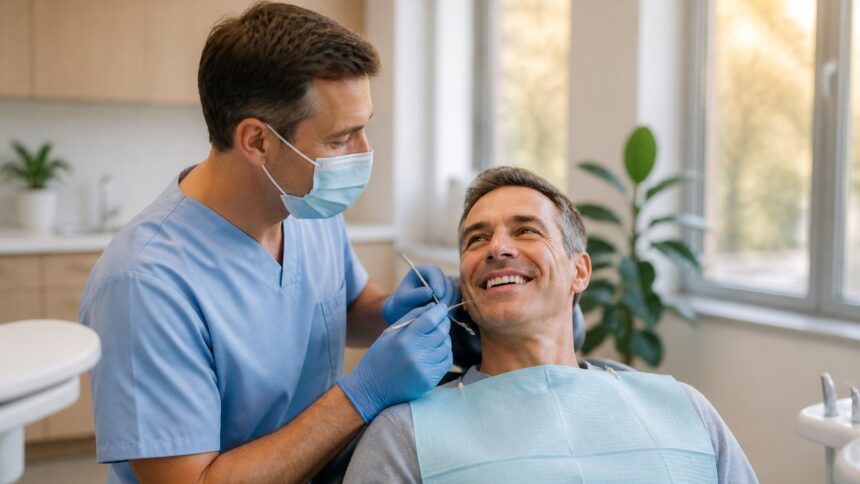
Cosmetic dentistry focuses on the appearance of teeth, gums, and bite, while supporting oral function. Treatments range from minor surface refinements to full-mouth reconstruction, and each option targets specific concerns. People pursue these services to address worn enamel, uneven spacing, discoloration, and missing teeth. Here are some of the benefits of cosmetic dentistry:
Increased Symmetry
Balanced tooth shape and alignment influence how the entire face looks and how the upper and lower arches meet. When teeth are chipped, rotated, or irregularly sized, the midline of the smile may look off-center. Cosmetic dentistry treatments such as contouring, bonding, or veneers adjust the visible surfaces, and they help create a more uniform outline from one side to the other. As symmetry improves, lips rest more evenly over the teeth, and this supports a more stable bite pattern over time.
Improved Bite
An uneven bite places extra force on certain teeth, and it also affects jaw joints and surrounding muscles. When upper and lower teeth do not meet in a coordinated way, chewing efficiency drops, and teeth may wear down faster. Cosmetic dentistry addresses these issues with treatments that reshape, rebuild, or reposition teeth. A more stable bite supports smoother jaw movement, and it may help reduce the risk of fractures in heavily loaded teeth. A dentist may provide the following:
- Reshaping high points on teeth to reduce interference during chewing
- Adding material to worn teeth so opposing surfaces meet correctly
- Closing spaces that trap food and disrupt natural bite paths
- Aligning teeth to improve contact between upper and lower arches
Whitened Teeth
Surface stains from food, drinks, or tobacco alter the shade of enamel. They typically collect in small pits or grooves. Over time, these stains build up, and brushing alone does not fully address deeper discoloration. Whitening treatments in cosmetic dentistry use targeted agents to break down stain molecules, and this helps to restore a lighter, more uniform color across visible teeth.
Professional whitening options differ from over-the-counter products, and they are tailored to the person’s existing enamel and sensitivity level. A dentist first evaluates the cause of discoloration. This guides the choice between whitening gels or alternative approaches. Since some internal stains respond poorly to standard whitening, they may need veneers or bonding instead.
Teeth that are whitened in a planned sequence typically integrate better with other cosmetic dentistry treatments. When whitening happens before restorations are placed, new crowns or veneers match the lighter shade. This approach reduces the need to replace recent restorations later, and it also simplifies long-term maintenance because shade differences remain less noticeable.
Restored Missing Teeth
When a gap stays unfilled, neighboring teeth tend to drift, and the opposing tooth may over-erupt into the space. Restorative options such as bridges, partial dentures, or implant-supported crowns fill these gaps, and they restore a continuous arch. Spaces from missing teeth affect appearance and function.
Replacing missing teeth through cosmetic dentistry also helps stabilize facial structure, and it supports clearer speech in some cases. Teeth play a role in shaping the lower third of the face. They maintain vertical dimension between the upper and lower jaws. When replacements restore this support, lips and cheeks receive better underlying structure.
Visit a Cosmetic Dentistry Clinic
People can start with a consultation to review tooth color, alignment, wear patterns, and missing spaces. A structured plan coordinates whitening, reshaping, and restorative work so each step supports the next, and this approach helps maintain both function and appearance. Comprehensive, personalized dental care helps align cosmetic goals with long-term oral health needs.