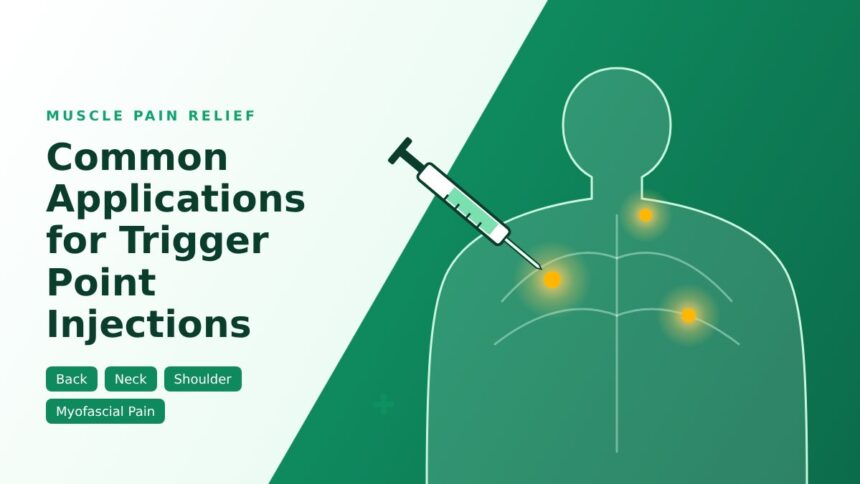
A trigger point is a tight, irritable knot within a muscle, and these typically feel tender to the touch, sending pain to other areas of the body. When a provider gives a trigger point injection, they place a small amount of medicine directly into the knot. The medicine typically contains a local anesthetic, sometimes combined with a corticosteroid. Here are some standard applications for trigger point injections:
Upper and Lower Back Pain
The lower and upper back contain large muscle groups, and these muscles can develop trigger points. Poor posture, injuries, and skeletal abnormalities are major factors. Before a provider recommends trigger point injections, they will ask about your symptoms and medical history. Share details about any of the following signs:
- Aches that stay constant in one area of the back
- Knots that you feel under the skin
- Pain that worsens after sitting or lifting
- Muscle tightness that limits bending or twisting
Myofascial Pain
Myofascial pain affects muscles and the thin tissue around them, and it typically centers on trigger points. If the pain stays in one muscle group for weeks, a provider may check for these knots. The exam involves pressing on the muscle to find tender spots.
Once the provider locates a trigger point, they clean the skin and insert a thin needle. The injection itself usually lasts less than a minute. Some patients feel a brief twitch in the muscle, and others notice a short sting.
Results vary from person to person. Since myofascial pain has several causes, providers may pair injections with stretching or physical therapy. Mild soreness at the site may last a day or two, so plan for light activity afterward.
Neck-related Issues
When neck muscles tighten, they may cause stiffness and limit how far you turn your head. Neck trigger points sometimes send pain toward the head, and some people develop tension headaches. Screen time and sleeping positions often play a role.
A provider examines the neck and upper shoulders by touch. The injection uses a fine needle, and the provider avoids nearby nerves and blood vessels. If you take blood thinners, tell the provider before the procedure. Some medications raise the risk of bruising at the site.
Injured Shoulder
After you strain or overuse your shoulder, the surrounding muscles may form trigger points. The rotator cuff and upper back muscles are typical sites. These knots may limit your range of motion, and reaching overhead may feel painful. A provider will typically review a few details first:
- Whether a tear or fracture needs imaging
- Which movements bring on the pain
- How long the symptoms have lasted
- Which treatments you have tried
Trigger point injections do not repair torn tissue, so a provider may order an X-ray or other imaging first. If the pain comes from muscle knots alone, an injection may be one part of your treatment plan. Gentle shoulder exercises typically follow the injection.
Schedule Trigger Point Injections
If muscle pain in your back, neck, or shoulder lingers for weeks, a provider may check for trigger points. Bring a list of your current medications, and note any recent injuries or strains. Contact a clinic to schedule a visit or ask questions about the procedure. Seek emergency care for sudden, severe pain with numbness or weakness.