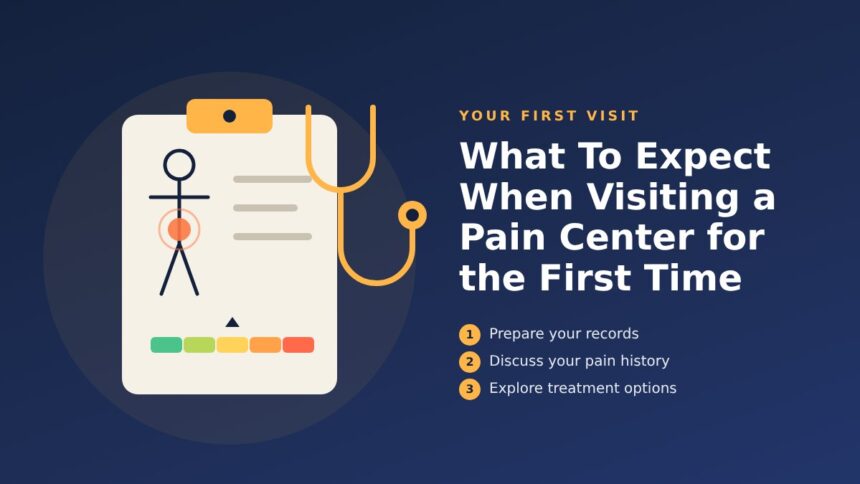
Your first visit to a pain center generally focuses on understanding your symptoms, medical history, and how pain affects your daily life. This evaluation helps the care team discuss treatment options and establish goals suited to your needs. Here is a closer look at what to expect during your first appointment:
Preparing for Your Appointment
Preparing for the visit to a pain center can help the appointment run smoothly. Some centers send intake forms before the visit, and staff members often ask you to complete them in advance. Gather the following items before you leave home so the provider has a full picture of your condition:
- Photo ID and insurance card: The front desk uses these to verify coverage and create your file.
- Medication list: Include prescription drugs, over-the-counter products, and supplements, along with doses.
- Imaging and test results: Bring copies of X-rays, MRI reports, or nerve test results.
- Pain journal: A record of when pain starts, how long it lasts, and what changes it causes; it gives the provider useful detail.
Discussing Your Pain History
The provider begins the visit by asking about your pain. Expect questions about where the pain is located, when it started, and how it feels. Some people describe burning or tingling, while others report aching, stabbing, or numbness. The provider at the pain center also asks how pain affects your sleep, work, and daily activities; these answers guide the next steps.
The provider reviews your medical history next. This review covers past injuries, surgeries, existing conditions, and treatments you have already tried. Share details about physical therapy, medications, or injections, and mention whether each one helped. The provider may then perform a physical exam, including checks of posture, reflexes, strength, and range of motion. If the cause of your pain remains unclear after the exam, the provider may order more tests.
Exploring Your Treatment Options
After the evaluation, the provider explains treatment options based on the findings. Pain centers often combine several approaches, and the plan depends on your condition, history, and goals. Options often fall into the following groups.
Nonsurgical Approaches
Nonsurgical care often comes first in a pain management plan. Options include medication management, physical therapy, and changes to sleep and activity routines. People with fibromyalgia or peripheral neuropathy often start here, and the provider adjusts the plan over time.
Minimally Invasive Procedures
Minimally invasive procedures use needles or small devices instead of large incisions. An epidural steroid injection places medication near irritated spinal nerves, and radiofrequency ablation uses heat to interrupt pain signals from specific nerves. Spinal cord stimulation involves a small device that sends mild electrical pulses to the spinal cord. The provider explains how each procedure works, what recovery involves, and the risks that apply to you.
Clarifying Your Follow-Up Plan
Confirm the plan and your next appointment before you leave. The front desk schedules follow-up visits, procedures, or tests, and staff members will explain any preparation steps. If a procedure requires fasting or a driver, the staff will provide written instructions. Track your symptoms between visits. Note changes in pain level, sleep, and activity, and bring these notes to your next appointment. When the provider reviews your progress, they can adjust the plan as needed.
Visit a Local Pain Center
A first visit to a pain center follows a clear process. You prepare your records, discuss your pain and health history, review treatment options, and confirm a follow-up plan. Consistent communication with your provider is key, as it allows them to adjust your treatment plan and address new symptoms effectively. Contact a modern pain center in your locality to schedule your appointment today.