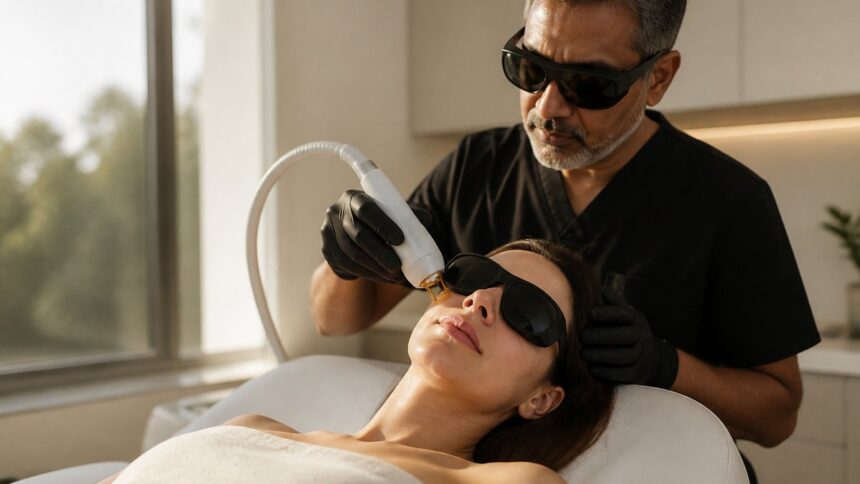
Laser treatment uses focused light energy to address specific concerns, such as unwanted hair, uneven pigmentation, and changes in skin texture. The approach, expected results, and recovery time vary by procedure and your skin’s characteristics. Here is more information on what you should know about laser treatments:
Laser Treatment Options
Providers choose a laser treatment based on the concern, the treatment area, and your skin and hair type. Some devices remove thin outer layers of skin, while others heat the tissue beneath the surface without breaking it. These two approaches are called ablative and non-ablative treatments. The following are some common categories you may encounter during a consultation:
- Laser hair removal: The light targets pigment in the hair follicle. It aims to reduce hair growth on areas such as the face, underarms, legs, or bikini line.
- Skin resurfacing: Ablative and non-ablative lasers address skin texture. Providers use them for fine lines, wrinkles, and signs of sun damage.
- Pigment treatment: These lasers target excess melanin, the substance that gives skin its color. People often explore them for age spots, freckles, and uneven tone.
- Vascular treatment: The light targets hemoglobin, the red pigment in small blood vessels. People research this option for rosacea-related redness, broken capillaries, and spider veins.
Benefits and Suitability Assessment
Laser treatment does not suit everyone or every concern. A provider reviews your goals, skin type, and health history before recommending a plan, and this review informs the device choice and number of sessions. Results vary from person to person.
Explore Potential Benefits
People often choose laser treatment as it focuses on a specific area with limited contact with surrounding skin. Hair removal sessions aim to reduce time spent shaving or waxing, and skin treatments aim to improve texture, tone, or redness. Plans may include several sessions spaced weeks apart.
Assess Treatment Suitability
Skin tone, hair color, and medical history influence which laser a provider selects. Hair removal lasers detect contrast between hair and skin, so very light, gray, or red hair often responds less. Darker skin tones need specific wavelengths that lower the risk of pigment changes. Recent sun exposure, certain medications, and pregnancy can also affect timing, and a provider will ask about each.
Procedure Preparation
Preparation starts with a consultation at a licensed clinic. During this visit, the provider examines the treatment area, reviews your medications, and sometimes performs a patch test on a small section of skin. Ask about the device and how many sessions you’ll need.
Your provider will give specific instructions, and following them is fundamental to a smooth appointment. Some providers ask you to avoid sun exposure and self-tanning products for several weeks before treatment. Hair removal clients usually shave the area a day or two ahead but skip waxing or plucking, as the laser needs the root in place.
Recovery Planning
Recovery depends on the laser type and session intensity. Non-ablative treatments often involve mild redness or swelling for a few hours to a few days, while ablative treatments usually require a longer recovery period. Your provider will outline what to expect and when to return for a follow-up. Aftercare focuses on protecting the skin while it heals. Apply sunscreen daily, avoid hot showers and heavy exercise for the period your provider recommends, and pause harsh skincare products. If you notice blistering, crusting, or other changes, contact the clinic.
Learn More About Laser Treatment
Laser treatment uses focused light to address unwanted hair, signs of aging, uneven pigmentation, and visible redness. Aftercare is key to achieving the best results and emphasizes protecting your skin as it heals. Key steps include applying sunscreen daily, avoiding hot showers and intense exercise, and pausing harsh skincare products. To learn more about laser treatment, contact a modern med spa near you to schedule your appointment today.