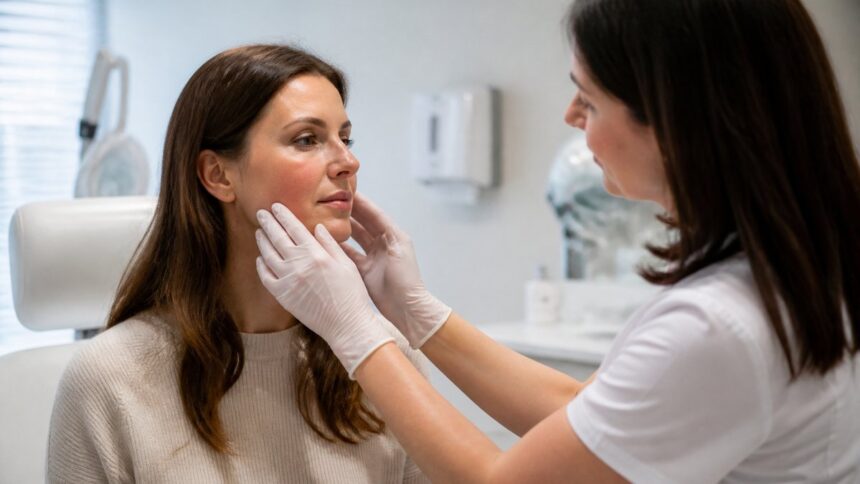
Dermatologists typically complete years of training in skin disease, and many of them treat chronic conditions every day. When you live with eczema or psoriasis, a dermatologist helps you understand your skin and your treatment options. Here is more information on each step of that process and what it involves at a dermatology clinic:
Diagnosing Root Cause
Since eczema and psoriasis share symptoms like redness and itching, your dermatologist may begin with a careful exam. The exam covers your skin, scalp, nails, and joints. Your dermatologist may also ask about family history, and a small skin biopsy may follow.
Eczema comes in several forms, and atopic dermatitis is the most common one. Psoriasis has several distinct types as well. Your dermatologist names the type because each one responds differently to treatment:
- Plaque psoriasis: Red patches with silvery scale on elbows, knees, or scalp
- Guttate psoriasis: Small, drop-shaped spots that often follow strep throat
- Inverse psoriasis: Smooth, red patches in skin folds like the armpits
- Pustular psoriasis: White, pus-filled bumps surrounded by red skin
- Erythrodermic psoriasis: Widespread redness across most of the body, which needs urgent care
Offering Topical or Oral Corticosteroids
When your skin flares, corticosteroids often serve as the first line of treatment at a dermatology clinic. These medicines reduce redness, swelling, and itching. Topical forms come as creams, ointments, lotions, or foams, and they range from mild to very strong.
Your dermatologist matches the strength to the body area. Thin skin on the face needs a mild product, and thick plaques on elbows may need a stronger one. If you use strong steroids too long, your skin may thin or develop stretch marks. Follow the exact schedule on your prescription.
Oral corticosteroids treat severe flares, but dermatologists typically don’t prescribe them for long periods. In some cases, psoriasis might worsen after a patient stops taking oral steroids. Short courses also limit risks like high blood sugar and bone loss.
Prescribing Medications
Treatment plans depend on your diagnosis, symptom severity, and medical history. If over-the-counter creams do not control your symptoms, your dermatologist may prescribe other medications. Some options act on the skin directly, and others work throughout the body.
Since eczema and psoriasis involve the immune system, many medications target inflammation. Some drugs calm itching, and others slow the rapid growth of skin cells. Prescription options include these groups:
- Calcineurin inhibitors
- Vitamin D analogs
- Oral medications
Each medication has possible side effects, and some require regular blood tests. Tell your dermatologist about all your current medicines and supplements. When needed, your dermatologist adjusts the plan as your skin responds over time.
Performing Injections
Injections offer another option for stubborn or widespread disease. When a few thick plaques resist creams, your dermatologist may inject a corticosteroid directly into them. This method targets small areas, and the visit typically takes only a few minutes.
Biologics are injectable drugs that block specific parts of the immune response. Some treat eczema, and other drugs address psoriasis; many patients learn to give these shots at home every few weeks. Before you start, your dermatologist screens for infections like tuberculosis.
Schedule a Dermatology Clinic Visit
Eczema and psoriasis are long-term conditions, and treatment changes over time. A dermatologist tracks your progress at each visit, so before your appointment, write down your symptoms, triggers, and the products you use. If you notice new symptoms like joint pain, mention them during your visit. Psoriasis sometimes affects the joints, and early evaluation helps guide your care.