

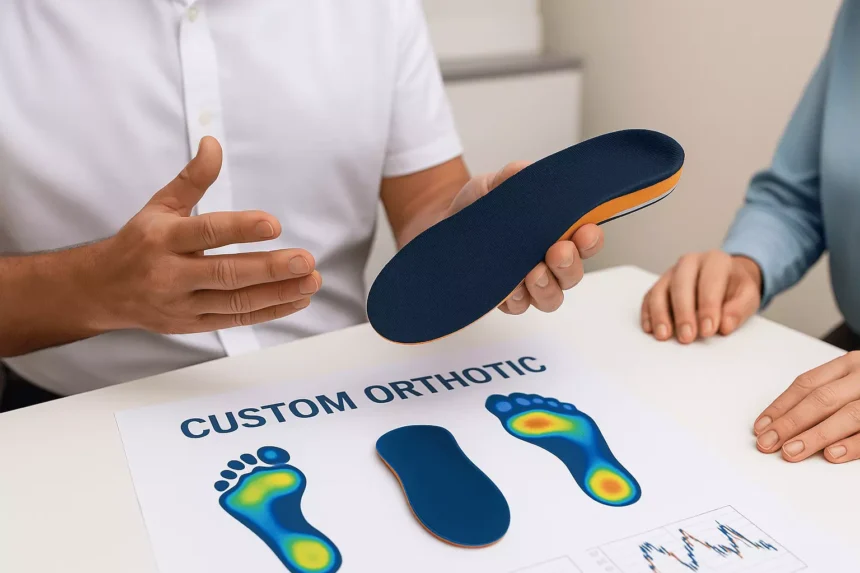
Custom orthotics are shoe inserts molded to a patient’s unique foot structure, and they are designed to correct alignment issues and redistribute pressure. They reduce strain on the feet, ankles, knees, and lower back. When chronic pain affects a patient’s ability to move comfortably, custom orthotics may help reduce daily discomfort while supporting long-term mobility. Here is more information on custom orthotics and how they manage chronic pain:
What Are Custom Orthotics?
Custom orthotics are shoe inserts designed to fit inside a patient’s footwear. Unlike over-the-counter insoles, they are built from a mold or scan of the patient’s foot; this process captures the foot’s exact shape and structure. A podiatrist may prescribe custom orthotics after evaluating a patient’s gait, posture, and specific pain points, which makes sure the device addresses the individual’s unique needs.
Because they are customized to each patient, these devices can correct issues that generic insoles cannot. Flat feet, high arches, and uneven weight distribution all respond differently to support. Custom orthotics are manufactured from materials suited to the patient’s activity level; options may range from rigid plastics, which provide stability, to softer foams that offer cushioning.
How Do They Work?
Custom orthotics work by correcting foot alignment during movement. When the foot strikes the ground, forces travel upward through the ankles, knees, hips, and spine. If the foot is misaligned, these forces distribute unevenly; this places extra strain on joints and soft tissue. Patients with recurring knee or back pain may find poor foot alignment a contributing factor, since misalignment is sometimes a root cause of persistent musculoskeletal symptoms.
By supporting the arch and repositioning the foot, orthotics reduce uneven loading across the lower body. The result is a smoother, more natural stride, and over time, this mechanical correction can reduce inflammation. Because the foot is no longer compensating for structural imbalance, repetitive strain that leads to chronic discomfort is less likely to accumulate.
How Is Chronic Pain Managed?
Chronic pain management often requires a combination of approaches, and custom orthotics are a part of a broader treatment plan. Podiatrists may pair these devices with physical therapy. When used alongside targeted stretching or activity modification, each element reduces strain on the affected area while promoting healing. Custom orthotics help reduce pressure on inflamed tissue and improve circulation, which can lessen pain during daily activities. Regular follow-up appointments allow podiatrists to adjust the orthotics as symptoms change.
What Are the Advantages?
Custom orthotics offer several advantages over standard shoe inserts. Because they’re built for each patient’s specific foot shape, they provide more precise support. Potential benefits include:
- Reduced pain in the feet, knees, and lower back
- Improved posture and balance during standing or walking
- Slower progression of foot deformities, such as bunions or hammertoes
- Better shock absorption during high-impact activities
Improved alignment helps reduce daily wear on joints, which can lead to fewer flare-ups and less reliance on pain medication.
Manage Chronic Pain Today
Custom orthotics offer a practical, evidence-based way to address the root cause of discomfort rather than mask symptoms; with a podiatrist’s guidance, they can restore comfort and mobility. If you are experiencing ongoing foot, knee, or back pain, schedule a consultation with a podiatrist. A proper evaluation can determine whether custom orthotics are the right next step toward lasting relief.