Allergy symptoms can mimic a cold, and many people visit urgent care for relief to determine the root cause. Allergy testing identifies the specific substances behind your sneezing, itching, or rashes. When a provider knows your triggers, they can recommend targeted next steps for managing them. This is how allergy testing works and what to expect:
Allergens are Introduced
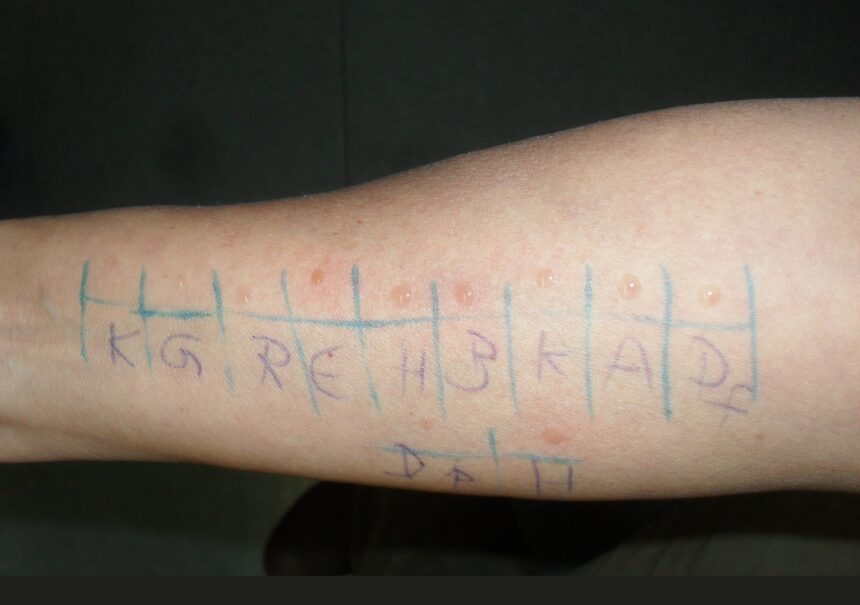
A skin prick test is a standard allergy testing tool. Before the test begins, a provider cleans an area on your forearm or upper back. They mark the skin with a pen, and each one matches a specific allergen. The marks sit closely together.
Before starting, your provider selects allergens that match your symptoms and medical history. Typical choices include pollen, dust mites, and pet dander, but food allergens may also appear. Mold spores and insect venom are other options. A single test panel can include many allergens.
Skin is Scratched
Next, the nurse places a small drop of each allergen beside its matching mark. The nurse uses a sterile lancet on each spot, and the allergen enters the top layer of skin. Since the scratch stays shallow, patients feel only brief pressure or mild discomfort, and this method typically doesn’t cause bleeding. The test panel also includes two controls:
- Histamine: a positive control that typically produces a small bump
- Saline: a negative control that typically produces no reaction
Antihistamines are used to block allergic reactions, so they may interfere with your results. If you take any daily medications, bring a complete list to your appointment. Your provider may ask you to pause certain medicines several days before testing. Some antidepressants and heartburn drugs also affect skin test readings.
Reactions are Observed
While the allergens absorb into your skin, you wait for 15 minutes. You need to keep your arm or back still during this time. Your provider stays nearby during the waiting period. Itching may develop at some sites, but scratching those areas may affect the readings.
After the wait, the provider examines each test site closely. A raised, red bump that resembles a mosquito bite signals a possible allergy. The provider measures each bump, and larger bumps often point to stronger sensitivity. As test results do not always match daily symptoms, your provider compares them with your health history.
Larger bumps may require further evaluation to confirm the specific allergen, ensuring accurate treatment plans. The process itself is quick and straightforward, giving you clear insights into potential triggers. While the results are helpful, understanding their context alongside your daily experiences is key to managing allergies effectively.
Doctor Gives Intradermal Test
Sometimes a skin prick test shows no reaction despite clear allergy symptoms. In that case, your provider may recommend an intradermal test, which places the allergen slightly deeper in the skin. A thin needle injects a tiny amount under the surface, and a small bubble forms. You then wait for results. Providers may use this test for:
- Insect venom allergies
- Penicillin allergies
- Skin prick results that are unclear
Schedule Allergy Testing Near You
If seasonal sneezing, hives, or itchy eyes keep returning, allergy testing may help identify the cause. Many urgent care centers offer skin testing, and some accept walk-in patients. Check your insurance coverage before your visit. Call your local clinic or book online today so a provider can review your symptoms.