
Sciatica describes pain along your sciatic nerve. This nerve runs from your lower back into each leg. Symptoms often start in your spine, and they can travel toward your foot. Understanding these signs helps you act early, since you will seek the right care while your condition remains manageable.
Symptoms of Sciatica Explained
Sciatica can show up in several ways, and knowing what to look for helps you describe your experience clearly when you talk to your provider.
Pain Symptoms and Sensations
Pain is the primary symptom of sciatica, and it usually affects one side of your body. The feeling may be sharp, burning, or like an electric shock, though some people experience a duller ache. Movement often makes both worse. The intensity can shift through the day, feeling mild in the morning, building with activity, and peaking after long periods of sitting or standing.
Numbness, Tingling, and Weakness
Numbness and tingling often accompany the pain, leaving your leg or foot less responsive than usual. These sensations come and go or stay constant, depending on how much pressure affects the nerve. You may also notice a pins-and-needles feeling in your toes or the sole of your foot. Weakness in your leg or foot is another common sign. It may be harder to stand, walk, or even lift your foot, and this is a sign that nerve compression is affecting your muscle control.
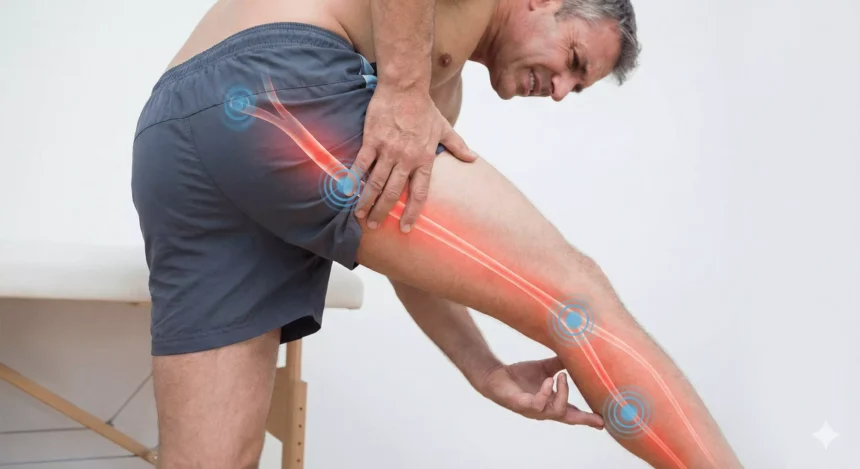
Pain Location Along the Nerve
Common areas where pain or discomfort may occur include:
- Lower back or buttock: Where symptoms most often begin.
- Back of the thigh: Pain travels downward along this path.
- Calf: Discomfort may deepen as it moves further down the leg.
- Foot or toes: Symptoms extend to the end of the nerve’s path.
The sciatic nerve is the longest in your body, and it branches into smaller nerves as it travels down each leg. This explains why symptoms may appear in different places for different people. One person may have pain in the buttock, while another has it in the calf or foot. The location of your symptoms often points to which specific nerve root is compressed. Your provider will use this information to guide your care.
Risk Factors and Triggers
Certain factors raise your risk of sciatic nerve pain. Extra body weight adds another factor, and it places more load on your lower spine. Your daily activity level also plays a role. A physically demanding job strains your back, while a sedentary lifestyle weakens supporting muscles. Posture is another contributing factor. Poor posture while sitting or standing shifts load unevenly across your spine. This imbalance will increase pressure on discs and nerve roots over time. If you sit at a desk most of the day, the angle of your hips and the support of your chair both affect how much stress your lower spine absorbs. Small adjustments to your workstation setup can reduce this strain, so make changes that are beneficial.
Treat Your Sciatica Today
This record helps your provider assess your condition, and it supports a more accurate diagnosis. Track your symptoms carefully before your appointment. Note where the pain starts, how it travels, and what makes it worse. Physical therapy strengthens the muscles that support your spine, and it can improve mobility while reducing pressure on the nerve. Several treatments can address sciatic nerve pain today.