

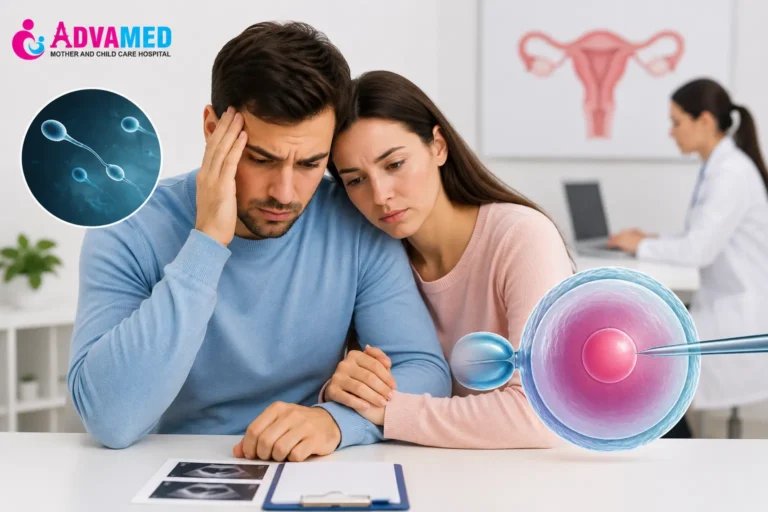
Infertility is a common health concern that affects many couples and individuals who are trying to conceive. It refers to the inability to achieve pregnancy after one year of regular, unprotected intercourse. The condition can involve one or both partners, and in some cases the underlying reason remains unexplained even after testing. Understanding the causes, as well as recognizing when to seek help from an infertility specialist, may help you make informed decisions about your reproductive health.
What Causes Infertility?
Infertility stems from a variety of factors, and these can affect either partner. More than one factor plays a role in some cases. Identifying the source often requires a series of evaluations conducted by a healthcare provider. Common causes vary, including:
- Ovulation-related disorders, such as polycystic ovary syndrome (PCOS), which can disrupt the release of eggs.
- Blocked or damaged fallopian tubes, which may prevent an egg and sperm from meeting.
- Chronic conditions like endometriosis, in which tissue similar to the uterine lining grows outside the uterus.
- Low sperm count or reduced sperm motility, which affects the ability of sperm to reach an egg.
- Abnormal sperm shape or production, which can interfere with fertilization.
Lifestyle and environmental elements may also contribute for both partners. In a portion of cases, no clear cause is found, a situation often described as unexplained infertility.
When Should You Seek Care?
Timing plays a meaningful role in fertility care. General guidance suggests that couples who have been trying to conceive without success for one year should seek an evaluation. For women over 35, an assessment after six months of trying is often recommended. Certain circumstances warrant an earlier appointment; you may benefit from speaking with an infertility specialist sooner if you or your partner also have a history of difficulty carrying a pregnancy.
A specialist can perform diagnostic tests to identify possible causes. These evaluations may include blood work to check hormone levels, as well as imaging to examine reproductive organs. Early assessment allows for a clearer understanding of the situation, and it can provide more time to explore available options.
How Is It Treated?
Treatment for infertility depends on the underlying cause, as well as the age of both partners and individual health circumstances. A specialist can develop a personalized plan after completing a diagnostic evaluation. Medication and hormone therapy may help regulate or stimulate ovulation in women who have irregular cycles; certain medications can also address hormonal imbalances in men.
Assisted reproductive technologies (ART) are among the most widely used treatment options available. One common approach is intrauterine insemination (IUI); this is where prepared sperm is placed directly into the uterus to improve the chances of fertilization. Another option is in vitro fertilization (IVF), a process in which eggs are retrieved and fertilized in a laboratory setting before the resulting embryo is transferred to the uterus.
Lifestyle adjustments are often recommended alongside medical treatment, and maintaining a balanced weight, reducing alcohol intake, stopping smoking, and managing stress may support overall reproductive health. Couples can explore other means of starting or expanding a family, such as donor eggs, donor sperm, or gestational carriers. A specialist may explain which approaches align with your specific situation.
See an Infertility Specialist
Infertility is a medical condition with many possible causes, along with a broad range of treatment paths. Advances in reproductive medicine continue to expand the options available, and many people who face challenges with conception can go on to build families with proper care. Ongoing research also continues to refine diagnostic methods and improve outcomes across different age groups. The most productive next step is a professional evaluation.